Why Older Homes in Wilmington Are Prone to Foundation Issues
If you own a home in Wilmington, you already know that our coastal climate is beautiful but tough on buildings. The combination of high humidity, heavy seasonal rains, and a high water table puts constant stress on foundations, especially in older neighborhoods where homes have stood for decades. Many of these houses were built with masonry foundations, pier-and-beam systems, or early poured concrete that simply was not designed to handle modern drainage demands.
In historic areas like Carolina Place, it is not unusual to find brick or stone foundations that have slowly absorbed moisture for fifty or even a hundred years. That prolonged exposure leads to mortar deterioration, hairline cracks that widen over time, and in some cases, structural movement. Recognizing the early signs of foundation problems can save you from major repairs later, and it helps you protect both your investment and your family's safety.
Masonry Foundation Cracks: What's Normal and What's Not
Not every crack in a masonry foundation is a red flag. Hairline cracks in mortar joints or surface crazing on concrete are common in older homes and often cosmetic. However, there are specific patterns that should prompt a closer look. Horizontal cracks, especially those that appear in the middle third of a foundation wall, often indicate soil pressure pushing inward. Stair-step cracks that follow the mortar joints in a brick foundation are another classic warning sign of settlement or heaving. Vertical cracks that are wider than a quarter inch, or any crack that lets daylight through, deserve immediate attention.
It is also important to monitor cracks over time. A crack that stays the same width for years is less concerning than one that grows seasonally or after heavy rain. If you notice new cracks appearing or existing ones widening, it is time to consult a professional. At Wilmington Waterproofing, we specialize in evaluating Foundation Waterproofing needs and can help you determine whether a crack is a simple repair or a symptom of a larger issue.
Bowing Foundation Walls and Other Structural Warning Signs
A bowing foundation wall is one of the most serious signs of foundation trouble. When a wall starts to lean or curve inward, it means the soil outside is exerting pressure that the wall was never designed to resist. This is common in older homes where backfill soils have become saturated and heavy over time. You might notice the wall bulging inward at the top or middle, and in severe cases, the floor above may feel uneven or bounce. Bowing walls should never be ignored, as they can lead to structural failure if left unaddressed.
Other structural warnings include doors and windows that stick or no longer latch properly, gaps appearing around window frames, and floors that slope or feel soft underfoot. Chimneys that pull away from the house are another indicator. These symptoms often point to foundation movement, and they are your home's way of telling you that the support system is under stress. If you live in a historic property, such as a Carolina Place historic home, these signs can be especially important to catch early because repairs are more complex in older structures.
Water Intrusion: The Silent Culprit Behind Foundation Problems
Water is the number one enemy of any foundation, and in Wilmington's wet climate, it is almost always involved in foundation problems. Poor grading, clogged gutters, and inadequate downspouts can direct rainwater toward the foundation instead of away from it. Over time, this leads to saturated soil, hydrostatic pressure, and water seeping into the basement or crawl space. Once water enters, it can erode the soil under the foundation, cause wood rot, and promote mold growth.
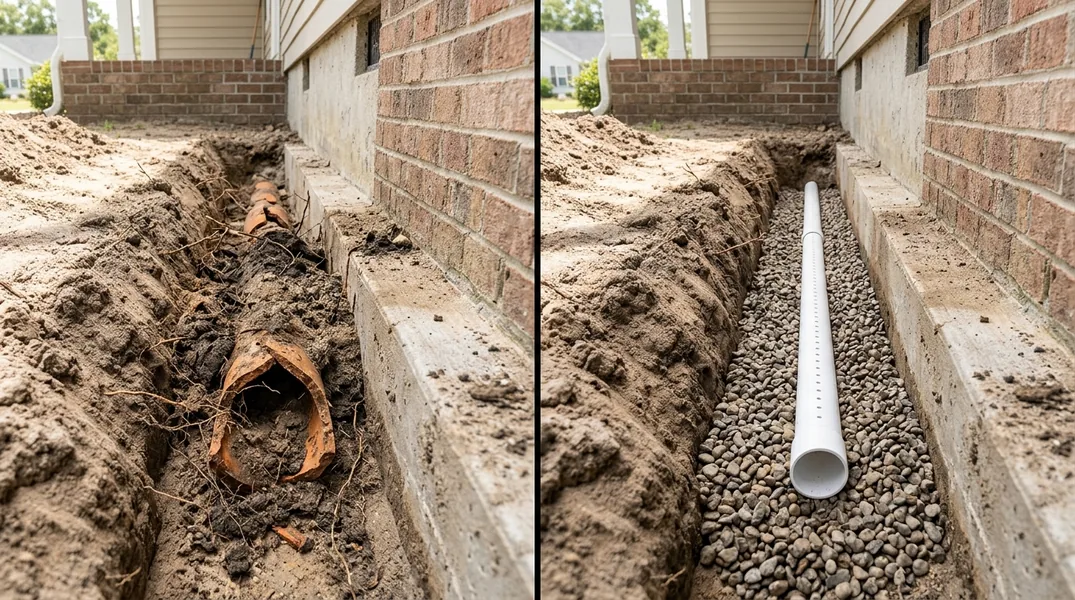
If you notice musty odors, efflorescence (a white powdery substance on masonry walls), or damp spots on the basement floor, you likely have a water intrusion problem. Solutions like an Interior Drain Tile System or Exterior Basement Waterproofing can help manage water before it damages the foundation. For homeowners in nearby areas like Leland and Wrightsville Beach, the risk is similar, as coastal soils and high water tables create the same challenges.
Foundation Problems Signs Near Me: When to Call a Professional
If you have spotted any of the warning signs mentioned above, it is wise to bring in a professional for an evaluation. A trained eye can distinguish between cosmetic issues and structural concerns, and they can recommend the right course of action. At Wilmington Waterproofing, we offer thorough inspections and free estimate consultations to help you understand what is happening with your foundation. We serve homeowners throughout the region, including Carolina Beach and other nearby communities.
Do not wait until small cracks become major structural problems. Early intervention is almost always less expensive and less disruptive than waiting for a foundation to fail. Whether you need Basement Waterproofing or a full foundation repair plan, our team can help you protect your home. Call us at (910) 765-8739 to schedule an inspection, or visit our website to learn more about our services and pricing.
Looking for a professional basement waterproofing contractor in Wilmington? Wilmington Waterproofing responds fast for all your basement waterproofing needs.
Get a Free QuoteOur services: Basement Waterproofing · Interior Drain Tile System · Exterior Basement Waterproofing